When injury meets skin, the body begins its timeless dance of healing. But in modern medicine, we lend nature a practiced hand. From simple cuts to complex surgical incisions, wound closure techniques play a vital role in preventing infection, speeding recovery, and restoring form and function.
In clinics, emergency rooms, and surgical suites across the USA, healthcare professionals follow trusted methods—rooted in tradition, refined by innovation—to close wounds safely and effectively.
Below is a clear and comprehensive guide to the top 7 wound closure techniques, how they work, and when they’re used.
The top wound closure techniques include sutures (simple, horizontal/vertical mattress, and subcuticular), surgical staples, wound-closure tapes, tissue adhesives (glue), skin grafts, and various flap procedures (advancement, rotation, transposition). Sutures offer precision but can be time-consuming, while staples and adhesives are faster but may have limitations, and other methods are used for more complex or large wounds.
1. Sutures (Stitches)
Sutures remain the gold standard—precise, versatile, and trusted. Their roots reach far into medical history, yet their materials and techniques continue to advance.
How Sutures Work: A needle passes through the skin on both sides of the wound, pulling the edges together. The chosen stitching pattern controls tension, prevents gaping, and supports healing beneath the surface.
Types of Suturing Techniques
-
Simple interrupted stitches – one of the most common patterns, offering strong control
-
Continuous sutures – faster, used for long incisions
-
Subcuticular sutures – placed under the skin for minimal scarring
-
Mattress sutures – ideal for high-tension or deeper wounds
Material Choices
-
Absorbable (e.g., Monocryl, Vicryl) – dissolve naturally over weeks
-
Non-absorbable (e.g., Nylon, Prolene) – used for skin closure; later removed
Ideal For
-
Surgical incisions
-
Deep lacerations
-
Areas under movement (joints, abdomen)
-
Cosmetic repairs
Pros
-
Highest level of control
-
Works for nearly any wound
-
Durable and customizable
Cons
-
Must be placed by trained professionals
-
Removal may be uncomfortable
-
Potential for scarring if not properly aligned
Buy Now: Ethicon Sfx Spiral Suture
2. Staples
Staples offer speed and strength—two qualities crucial in operating rooms and emergency care.
How Staples Work: A staple gun places small stainless-steel clips across the wound, securing the skin edges quickly and evenly.
When Staples Are Ideal
-
Long surgical wounds
-
Scalp lacerations
-
High-tension areas where sutures may tear
Why Doctors Choose Them
-
They significantly reduce closure time
-
They’re strong enough for thick or tough skin
-
Lower infection rates in some surgical cases
Pros
-
Efficient for large wounds
-
Secure closure
-
Minimal tissue reaction
Cons
-
Requires removal
-
Not suitable for the face
-
Sometimes causes small “railroad track” scars
Must Read: Open Wound: Types, Treatments, and Complications
3. Adhesive Skin Glue (Tissue Adhesive)
A modern, needle-free technique—simple yet elegant. A few drops can close a wound quickly without pain. Adhesive skin glue, or tissue adhesive, is a synthetic, often cyanoacrylate-based liquid that is applied to the surface of a wound to hold the edges together, promoting healing and creating a protective, water-resistant barrier. It is a common alternative to sutures or staples for closing minor lacerations and incisions, offering faster repair times and eliminating the need for suture removal.
How It Works:
- A specially formulated medical adhesive (like Dermabond) is applied to the wound, holding edges together as it dries into a protective layer.
- Polymerization: Upon contact with the fluid in the wound, the liquid adhesive polymerizes to form a strong, flexible film that holds the skin edges together.
- Bacteriostatic properties: The polymerized film has antibacterial properties, which helps to prevent infection.
- Healing: The adhesive remains in place as the wound heals underneath, eventually sloughing off as the skin regenerates (typically after about 5 days).
Best For
-
Small, clean cuts
-
Facial wounds
-
Pediatric care
-
Minor surgical incisions
Advantages
-
Virtually painless
-
Quick application
-
No return visit for removal
-
Often leaves minimal scarring
Limitations
-
Doesn’t work on deep or jagged wounds
-
Not ideal for areas with moisture or movement
-
Cannot be used inside the wound—only on top
Why It’s Popular in the USA
Especially in emergency rooms and urgent care clinics, glue is a favorite for children, cosmetic areas, and low-risk cuts.
Proper Application:
- Wound edges must be thoroughly cleansed and dried before application.
- An assistant is often needed to hold the wound edges together while the adhesive is applied.
- The adhesive is applied in multiple layers, allowing each layer to dry before the next is applied, and extended circumferentially around the wound to create a strong seal.
- Avoid getting the adhesive into the wound itself, as it is intended to be applied on the surface.
4. Steri-Strips (Adhesive Skin Closures)
Steri-Strips (Adhesive Skin Closures) are sterile, breathable adhesive strips reinforced with filaments used for non-invasive wound closure, providing support and increasing tensile strength to help skin lacerations and incisions heal. They are a comfortable and less invasive alternative to sutures or staples, which can help reduce scarring and the risk of infection. These hypoallergenic strips are easy to apply and can be used to support early removal of traditional sutures or staples.
Buy Now: Steri-Strip Adhesive Skin Closures
How They Work
- Reinforced structure: The strips are made with a non-woven backing and a hypoallergenic, pressure-sensitive adhesive, reinforced with polyester filaments for added strength.
- Wound support: They pull the edges of the wound together, providing support and increasing the wound's tensile strength.
- Improved healing: The non-invasive design helps minimize tissue trauma, reduce scarring, and lower the risk of infection compared to sutures or staples.
- Breathable and comfortable: Steri-Strips are breathable, promoting a comfortable healing environment, and the hypoallergenic adhesive is gentle on the skin.
When They’re Used
-
Small, shallow lacerations
-
Reinforcement after suture removal
-
Wounds healing well but needing extra support
Pros
-
No pain
-
No tools required
-
Minimal scarring
-
Helpful for cosmetic-sensitive areas
Cons
-
Not suitable for deep or wide gaps
-
Peel off if exposed to sweat or water
Typical Use in USA Clinics
- Often used after sutures are removed to give skin a little longer to strengthen.
- Less scarring: Promotes better cosmetic outcomes by reducing tension across the wound.
- Reduced infection risk: Non-invasive nature decreases the chance of infection compared to sutures or staples.
- Fast and easy application: They are quick to apply, making them convenient for medical settings and first aid.
- Increased comfort: They are comfortable for patients to wear and are breathable.
- Supports early removal of sutures/staples: Can be used to close a wound, allowing for the early removal of traditional sutures or staples.
Buy Now: Dynarex Secure Strip Wound Closure Strips
5. Zip Closure Devices (Non-Invasive Zip Sutures)
Zip closure devices, also known as non-invasive zip sutures, are a method of closing surgical incisions or lacerations without puncturing the skin. They consist of adhesive strips with a "zipper" that holds them together, allowing for adjustable tension to close the wound.
These devices can be less painful than traditional stitches or staples, reduce recovery time, minimize scarring, and potentially lower the risk of complications like infection, making them a popular alternative for both patients and providers.
How they work
- Application: The adhesive strips are applied to the skin on either side of the wound. The "zipper" fasteners connect the two strips, and the user pulls the straps to adjust the tension and close the wound.
- Tension control: The adjustable nature of the device allows for precise control over how the wound is closed, with the ability to customize the tension across the width of the incision.
- Mechanism: Unlike sutures or staples, these devices distribute stress evenly across the wound, leading to better collagen alignment and potentially increasing tensile strength faster
Benefits
- Less pain: They are a non-invasive method, meaning no needles are used, which can significantly reduce pain during placement and removal.
- Reduced scarring: The skin is not punctured, which eliminates needle puncture marks and can lead to a better cosmetic outcome.
- Faster closure: The application and removal process is often faster than with conventional sutures and staples.
- Fewer complications: They may be associated with a lower risk of surgical site infections and other wound complications.
- Increased patient satisfaction: The overall patient experience is often improved due to reduced pain and faster recovery time.
Potential drawbacks and considerations
- Adhesive strength: Contact with water can weaken the adhesive, so it's important to keep the area as dry as possible after application.
- Complications: While generally safe, some complications specific to the device have been reported, including skin discoloration, blisters, and redness.
- Tension: It's important not to overtighten the device, as this can be harmful. In cases of overtightening, the device should be removed and replaced.
- Suitability: These devices are typically recommended for low-tension, non-infected wounds, and are often used after deeper, tension-reducing layers have been applied.
Must Read: 9 Different Types of Wound Care Dressings and Their Uses
6. Hybrid Closure (Sutures + Staples)
A hybrid closure (sutures + staples) refers to a surgical wound closure technique that uses a combination of absorbable sutures for deep layers (subcutaneous or subcuticular) to reduce tension, and non-absorbable metal staples for superficial skin approximation. This approach leverages the benefits of both methods.
Advantages and Disadvantages
| Feature | Hybrid Closure Benefits | General Pros/Cons of Components |
|---|---|---|
| Speed | Faster overall closure time than all-suture methods due to quick staple application. | Staples are significantly faster to apply than sutures. |
| Wound Healing | Reducing deep tension with sutures helps promote healing. | Staples may be associated with a higher risk of adverse events or infection in some high-risk patient populations or specific body areas (e.g., lower extremity bypass surgery, C-sections). |
| Cosmetic Outcome | Meticulous deep suturing and proper skin edge eversion with staples can lead to good cosmetic results. | Meticulous suturing generally offers better cosmetic repair in sensitive areas (like the face), while staples can cause scarring in these areas. |
| Pain/Comfort | Pain is managed through the use of both methods. | Some studies indicate less pain during staple removal compared to suture removal, while others report more post-operative pain with staples. |
| Cost | The combined method has variable cost implications. | Staples themselves are more expensive than suture material, but may be more cost-effective overall by reducing operating time and potential complications/readmissions. |
7. Surgical Tape & Advanced Dressings
Surgical tapes and advanced dressings are essential components of wound management, designed to protect wounds, facilitate the healing process, and ensure patient comfort and safety.
Surgical Tapes
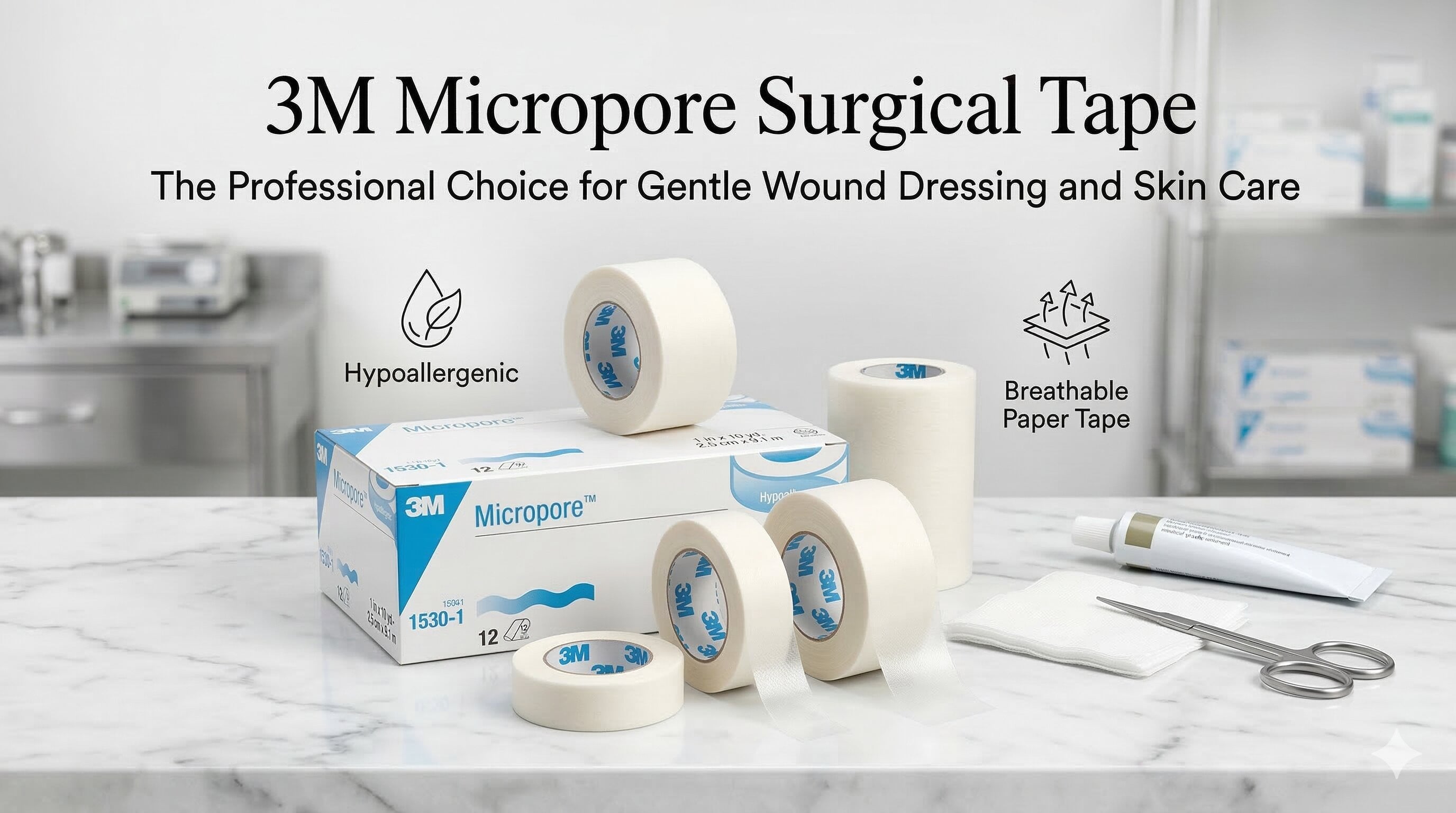
Surgical, or medical, tape is a pressure-sensitive adhesive tape used to hold bandages or other dressings onto a wound, secure medical devices like IV catheters or IV lines, or provide light support. Key characteristics include:
- Hypoallergenic Adhesives: Designed to adhere securely to the skin while minimizing irritation and allowing for easy, damage-free removal.
- Breathability: Many tapes, such as microporous paper tapes, are "breathable," allowing air and moisture vapor to pass through to the skin, which helps reduce the risk of skin maceration (softening due to moisture).
Types:
- Paper Tapes (e.g., Micropore): Gentle adhesion, highly breathable, ideal for sensitive or fragile skin and frequent dressing changes.
- Cloth Tapes (e.g., Velsilk, Durapore): High-strength, often no-stretch, used for securing heavy or bulky dressings and devices.
- Transparent/Plastic Tapes: Offer visibility to the underlying skin, often waterproof, and provide secure adhesion.
- Silicone Tapes: Provide very gentle adhesion, ideal for individuals with sensitive skin, fragile skin, or a history of skin tears, as they are easy to remove with minimal trauma.
Explore and Shop Surgical Tapes Online
Advanced Dressings
Advanced wound dressings go beyond simple protection, actively managing the wound environment to promote faster healing, control infection, and reduce pain. These dressings are vital for managing a wide spectrum of acute and chronic wounds (such as diabetic foot ulcers and pressure sores).
Key types and their applications:
- Hydrocolloid Dressings: Form a gel upon contact with wound exudate (fluid), maintaining a moist healing environment and encouraging debridement (removal of dead tissue).
- Alginate Dressings: Derived from seaweed, these highly absorbent dressings are ideal for moderate to heavily exuding wounds and help manage moisture balance.
- Foam Dressings: Highly absorbent, provide thermal insulation and cushioning, suitable for wounds with light to moderate exudate. Antimicrobial versions, often infused with silver, are available for infected wounds.
- Hydrogels: Water-based dressings that hydrate the wound bed, useful for dry wounds, burns, and radiation-damaged tissue.
- Antimicrobial Dressings: Contain agents like silver, iodine, or honey to fight existing infections or prevent new ones, especially important for chronic wounds.
- Biomimetic & Bioactive Dressings: The latest innovations include dressings that mimic the body's natural extracellular matrix or contain growth factors and other biological components to actively stimulate tissue regeneration. Some incorporate smart technology like sensors to monitor wound pH, temperature, or oxygen levels in real-time.
FAQs: Wound Closure Techniques
Q1. What is the most common wound closure technique used in the USA?
A. Sutures (stitches) are the most widely used technique in the USA because they offer excellent control, strength, and versatility. They can be placed in various patterns and are suitable for everything from surgical incisions to deep lacerations.
Q2. How do doctors decide which wound closure method to use?
A. Clinicians choose based on several factors: the wound’s depth, location, length, risk of infection, cosmetic concerns, and the patient’s age or skin quality. High-tension or deep wounds may require sutures, while small, clean cuts may be closed with glue or strips.
Q3. Which wound closure option leaves the least scarring?
A. For most patients, subcuticular sutures, tissue adhesive (skin glue), and zip closure devices provide the best cosmetic outcomes. These techniques minimize needle marks and help the wound heal smoothly.
Q4. Are staples better than stitches?
A. Staples are faster to apply and ideal for large or high-tension wounds, especially during surgeries. However, stitches offer more precision, making them better for facial wounds or areas where scarring is a concern. The choice depends on the situation.
Q5. How long do sutures or staples need to stay in?
A. The removal time varies by body part:
-
Face: 3–5 days
-
Scalp: 7–10 days
-
Arms: 7–10 days
-
Legs or torso: 10–14 days
-
Joint areas: 10–14 days
Your healthcare provider will give the best guidance based on the wound.
Q6. Can I shower after my wound has been closed?
A. Many closures allow gentle showering after 24–48 hours, but soaking (baths, pools) should be avoided until the wound is fully healed. For glue or Steri-Strips, avoid scrubbing or applying lotions/oils over the area.
Q7. What are signs that my wound is not healing properly?
A. Seek medical attention if you notice:
-
Increased redness or swelling
-
Warmth around the wound
-
Pus or unusual discharge
-
Bad odor
-
Fever
-
Worsening pain
These may indicate infection or wound separation.
Q8. Can skin glue replace stitches?
A. Yes, for small, clean, and shallow wounds, medical adhesive can effectively replace stitches. However, it’s not suitable for deep cuts, jagged wounds, or areas with significant movement or moisture.
Q9. What should I avoid after wound closure?
A. Avoid stretching the area, scratching the wound, applying unapproved ointments, exposing it to heavy sun, and engaging in activities that may reopen the cut. Follow all dressing-change and cleaning instructions provided by your clinician.
Q10. Do zip closure devices hurt when applied or removed?
A. No. These devices are non-invasive and don’t puncture the skin. Application and removal are generally painless, making them ideal for patients seeking a needle-free option with excellent cosmetic results.